Mana Uttarakhand: First Village of India
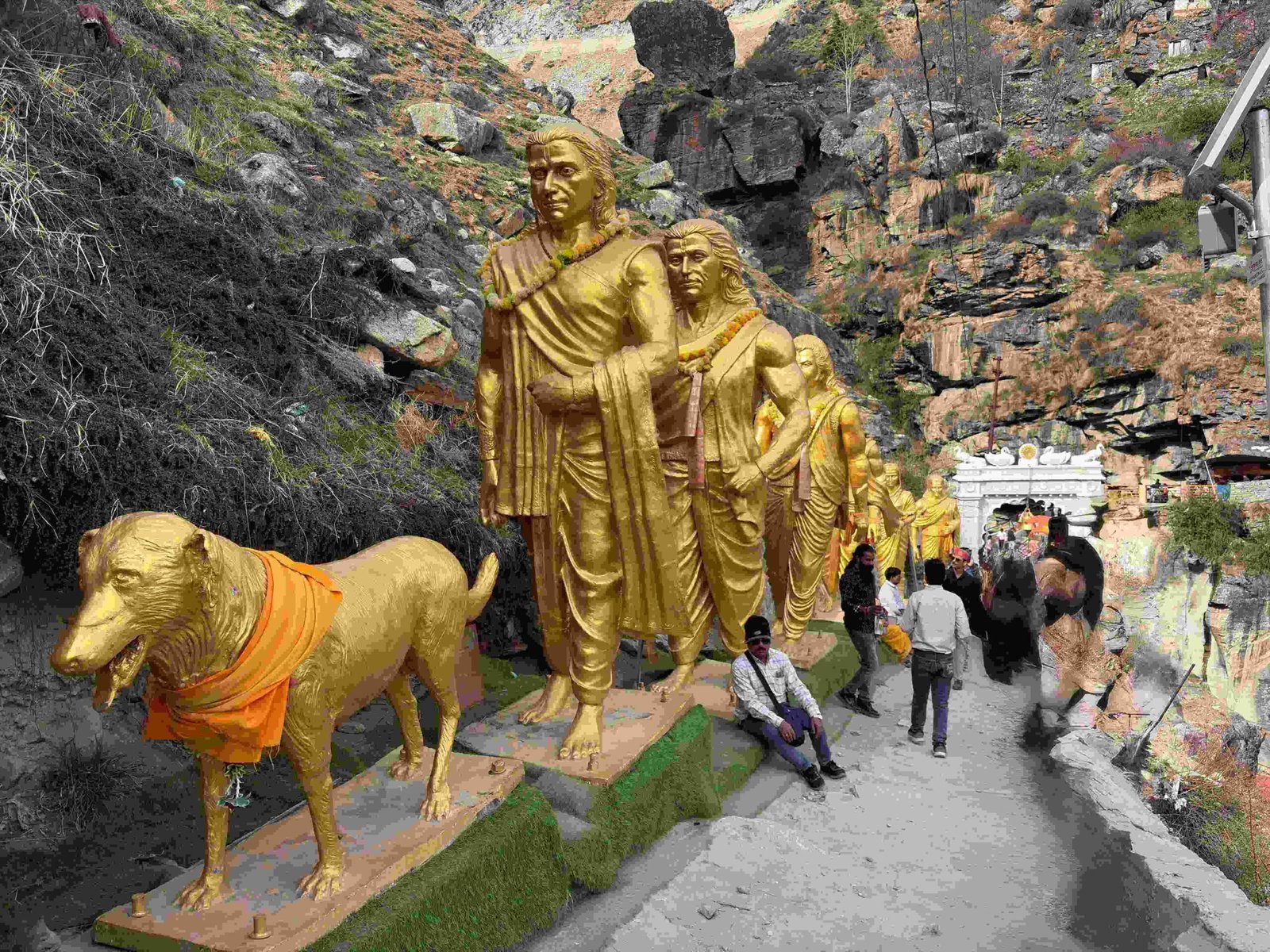
Mana Village in Uttarakhand is popularly known as first village of India. Located near Badrinath in Chamoli district, Mana is a high-altitude Himalayan village known for its dramatic mountains, ancient caves, the Saraswati River, Bheem Pul, and its close connection with Hindu mythology. It was traditionally described as the “last village of India,” but the newer “first village” identity reflects a different way of looking at India’s border villages.
I visited Mana in April, and what stayed with me was not just the scenery but the feeling of being somewhere where geography, mythology, local culture, and India’s border landscape all come together.
But there is an interesting story behind that name.
Where Is Mana Village in Uttarakhand?
Mana is located in Chamoli district of Uttarakhand, around 3 kilometres from Badrinath. Situated at an altitude of roughly 3,200 metres, the village lies close to India’s northern frontier.
The journey to Mana is itself part of the experience. As you move towards Badrinath and then continue towards Mana, the landscape gradually becomes more rugged and distinctly Himalayan.
The green valleys give way to massive rocky mountains, narrow roads, cold winds and, depending on the season, snow-covered peaks.
When I visited in April, I could immediately feel the difference in temperature and atmosphere. The air was cold and crisp, and the surrounding mountains made the place feel completely different from the towns and cities I was used to.
Mana is not the kind of destination where you need a long list of modern attractions. Its surroundings are the attraction.
Why Is Mana Village Famous?
Mana Village is famous for being popularly known as first village of India. Located near Badrinath in Uttarakhand, it is known for its stunning Himalayan scenery, ancient mythology, and unique borderland location.
The village is especially famous for Vyas Gufa, Bheem Pul, and the Saraswati River, which are connected with stories from the Mahabharata. Its traditional stone-and-wood houses and proximity to Badrinath also make it a popular destination for travellers.
During my April visit, what stood out to me most was the peaceful village atmosphere surrounded by dramatic Himalayan mountains. Mana feels like much more than a tourist spot—it is a place where nature, mythology, culture, and history come together.
What Is the First Village of India?
If you are looking for a simple answer to “What is the first village of India?”, the commonly cited answer is:
Mana Village, Uttarakhand.
However, there is an important distinction worth understanding.
Mana has historically been promoted as the “last village of India” because it is located near the India-Tibet border and was traditionally considered the last inhabited village accessible on this route.
The term “first village of India” became more prominent as the government began presenting India’s border villages as the country’s first villages rather than its last outposts.
During Prime Minister Narendra Modi’s 2022 visit to Mana, he described the border villages as India’s “first villages,” reinforcing this newer perspective.
So, if you see both terms online—“last village of India” and “first village of India”—they are not necessarily contradictory. They reflect two different ways of describing the same borderland geography.
India First Village Name: Why Is It Called Mana?
For people searching for the India first village name, the answer generally refers to Mana Village in Uttarakhand.
But Mana is much more than a title used for tourism.
The village has a strong connection with Hindu mythology and the Mahabharata. Several places around Mana are associated with stories involving the Pandavas, Ved Vyasa and Lord Ganesha.
This combination of natural beauty and mythology is what makes Mana particularly interesting.
During my visit, I noticed that mythology here doesn’t feel like something confined to a textbook or temple. It is connected to the landscape itself.
A cave becomes associated with Ved Vyasa.
A rock bridge becomes associated with Bheem.
A river becomes part of an ancient story.
And suddenly, the mountains around you feel like more than just mountains.
India First Village Photos
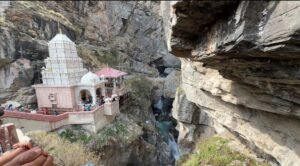
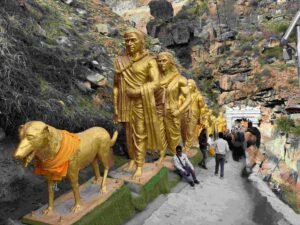
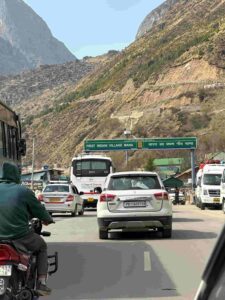
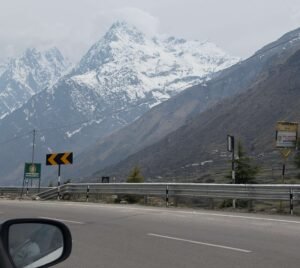
My April Visit to Mana Village
I visited Mana in April, and I think visiting in person gives you a completely different perspective compared with simply looking at photographs online.
The first thing I noticed was the silence.
There is obviously tourist activity around the popular spots, but the overall atmosphere is much quieter than what you experience in many commercial hill destinations.
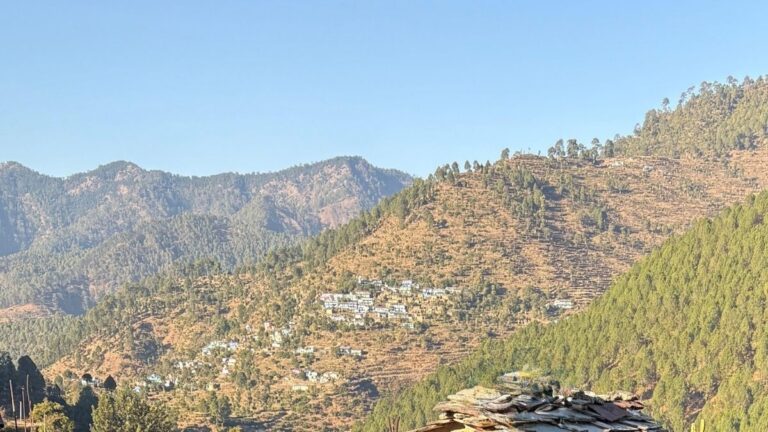
There are traditional houses, small local shops, rocky mountain slopes and enormous peaks surrounding the settlement.
The weather in April was cold, and I would strongly recommend being prepared for rapidly changing Himalayan weather if you are travelling during this period.
This is also something prospective visitors should keep in mind: April is not automatically an easy travel month for Mana. Snow and road conditions can affect accessibility, so checking current local conditions before travelling is important.
For me, though, the April visit made the experience memorable.
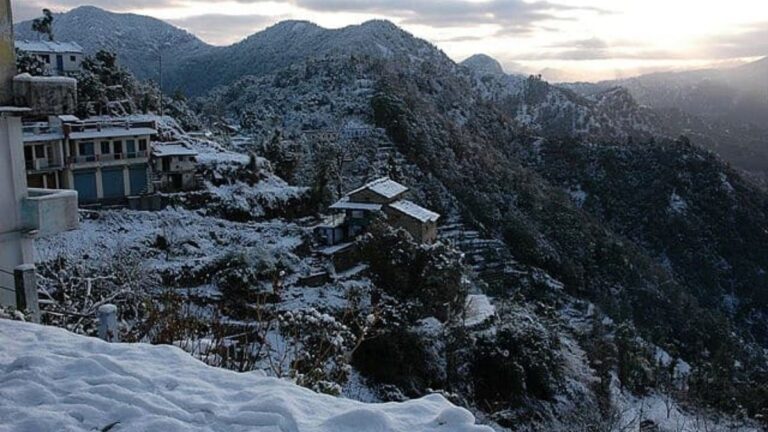
The combination of cold air, snow around the higher mountains and the relatively quiet surroundings created a completely different atmosphere.
Things to See in Mana Village
Although Mana is a small village, there are several places around it that deserve your time.
1. Vyas Gufa
One of the most famous attractions near Mana is Vyas Gufa, or the cave associated with Ved Vyasa.
According to Hindu tradition, Ved Vyasa composed the Mahabharata here and Lord Ganesha helped write it.
Whether you visit the cave from a religious perspective or simply as a traveller interested in India’s cultural history, it is an interesting stop.
The cave itself is relatively small, but its significance comes from the stories associated with it.
Standing there and looking at the surrounding Himalayan landscape, it becomes easier to understand why places like this became part of India’s ancient storytelling traditions.
2. Saraswati River
The Saraswati River is another important attraction near Mana.
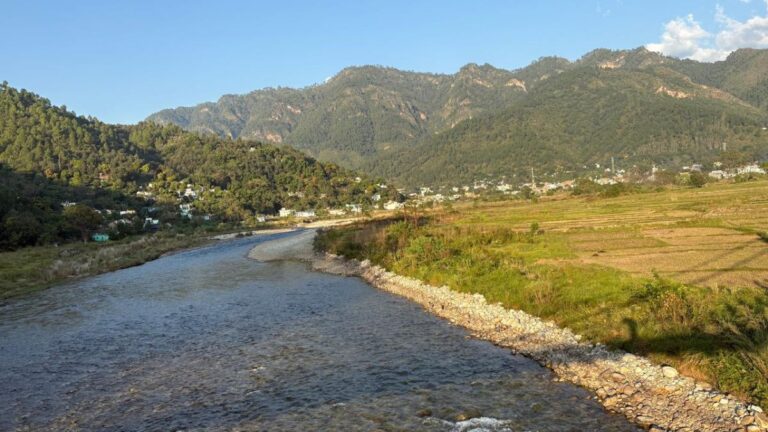
The river flows through the dramatic Himalayan landscape and is closely connected with local mythology.
The sound of the water rushing through the rocky terrain is something I particularly remember from my visit.
It is one of those places where you don’t necessarily need to do anything.
Just standing there for a few minutes and taking in the mountains and the river is enough.
3. Bheem Pul
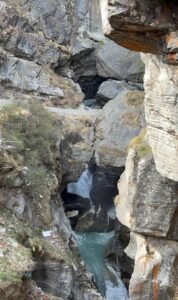
Another famous attraction is Bheem Pul, a massive natural rock formation over the Saraswati River.
According to local mythology, the rock is associated with Bheem from the Mahabharata.
The setting is impressive even if you put the mythology aside. The river flows forcefully below the enormous rock, creating a dramatic natural scene.
This is also one of the places where you will probably see plenty of visitors stopping for photographs.
4. Traditional Architecture
One of the things I enjoyed about Mana was its traditional Himalayan character.
The houses and structures use stone and wood, reflecting the local environment and traditional construction style.
Unlike some popular hill stations where modern hotels and commercial buildings dominate the landscape, Mana still retains a strong sense of its village identity.
That is something worth appreciating while visiting.
Why Was Mana Called the Last Village of India?
Before the “first village of India” terminology became popular, Mana was widely known as the “last village of India.”
The reason was geographical.
Mana is located near the India-Tibet border, and historically it was considered the last inhabited settlement on this route.
For decades, travellers would see signs and descriptions referring to Mana as the last village.
That identity became part of its tourism appeal.
Today, however, the language has changed.
Instead of viewing these border settlements as the “end” of India, the idea is to describe them as the “first villages” of the country.
This is why the phrase “India’s first village” is now strongly associated with Mana.
The physical location of Mana hasn’t suddenly changed from last to first. The terminology and perspective have changed.
And I think this is an important point for travel bloggers to explain rather than simply repeating one label without context.
Mana Village and Badrinath
Mana is closely connected with Badrinath, one of Uttarakhand’s most important pilgrimage destinations.
Badrinath is only around 3 kilometres away, making Mana a natural addition to a Badrinath itinerary.
If you are already travelling to Badrinath, visiting Mana gives the trip another dimension.
Badrinath offers a major spiritual experience, while Mana combines Himalayan scenery, mythology, village life and India’s border geography.
For me, these two destinations worked well together because they offered very different experiences within the same journey.
Best Time to Visit Mana Village
The best time to visit Mana depends heavily on weather and road conditions.
The traditional tourist season is generally from May to early November. Winter snowfall can make access difficult, particularly during the colder months.
I visited in April, but I would not recommend assuming that April will always have the same conditions.
Mountain weather can change quickly.
Before planning your trip, check:
- Current road conditions
- Weather forecasts
- Snowfall conditions
- Local travel advisories
- Badrinath and Mana accessibility
- Accommodation availability
If you are travelling in spring or late autumn, flexibility is particularly useful.
How to Reach Mana Village
Mana is accessible by road from Badrinath.
For travellers coming from other parts of India, Rishikesh is an important railway connection, while Dehradun’s Jolly Grant Airport is the nearest major airport commonly used for reaching the region.
If you are travelling from Delhi or other parts of North India, a road trip is another option.
However, don’t plan the journey purely according to Google Maps’ estimated driving time.
Mountain roads are very different from highways in the plains.
Road conditions, traffic, weather, landslides, construction and stops can all affect your actual travel time.
I would recommend keeping some buffer time rather than trying to fit Mana into an overly tight itinerary.
What to Eat in Mana
One of the things I like about travelling to mountain villages is trying local food rather than looking only for familiar restaurant dishes.
Uttarakhand’s mountain cuisine has its own character, and local products are an important part of village life.
In Mana, you can also find small shops and local sellers offering food and products for visitors.
If you are shopping, consider buying locally made products rather than only picking up generic tourist souvenirs.
It is a small way of contributing to the local economy while taking home something connected to the place you actually visited.
Is Mana Really first Village of India?
This is probably the most important question for anyone writing or reading about Mana.
Yes, Mana is popularly known as India’s first village, but the phrase should be understood as a modern tourism and border-development identity rather than a constitutional designation giving Mana an exclusive national title.
Historically, Mana has been called India’s last village.
The newer “first village” terminology comes from the idea that border villages should be seen as the country’s first settlements rather than its final outposts.
This distinction makes your travel article more accurate and also helps explain why different websites may use different descriptions.
Instead of saying that one term is simply “right” and the other is “wrong,” it is better to explain the context.
My Experience: What I Loved About Mana
The most memorable part of my April trip wasn’t one particular attraction.
It was the overall atmosphere.
Mana doesn’t feel like a destination designed purely for tourists.
It feels like a real Himalayan settlement that happens to have become an important tourist attraction.
The mountains are enormous.
The air is cold.
The roads remind you that you are in a high-altitude region.
The traditional houses provide a glimpse into local architecture.
And the mythology gives almost every major attraction an additional layer of meaning.
What surprised me most was how the idea of “first” and “last” suddenly felt less important once I was actually there.
Standing among those mountains, Mana felt less like a point at the edge of a map and more like a place with its own identity.
Final Thoughts
Before visiting Mana, I knew it mainly because of its reputation as first village of India. But after experiencing it in person, I realised that the label is only one small part of the story.
As someone who shares Himalayan travel experiences and stories through Garhwal Stories, my April visit to Mana gave me an opportunity to experience the place beyond the usual photographs and travel headlines.
Mana is where ancient mythology meets modern India. It is where enormous Himalayan landscapes surround a small traditional village, and where stories connected with Vyas Gufa, Bheem Pul and the Saraswati River are still an important part of the experience.
It is a place that was once commonly described as India’s “last village” and is now increasingly introduced as the country’s “first village.” Perhaps that change in perspective is what makes Mana even more interesting.
The cold mountain air, the sound of the Saraswati, traditional houses, local stories and the sheer scale of the Himalayas are memories I will carry with me—and experiences that I am happy to share through Garhwal Stories.
So, if you are planning a Badrinath trip and have enough time, don’t treat Mana as just another photo stop.
Walk around.
Look at the mountains.
Notice the architecture.
Listen to the river.
Learn about the local stories.
And most importantly, remember that this is not simply a place with a catchy tourism label.
Mana is a living Himalayan village with its own history, culture and landscape—and experiencing it firsthand is what makes the journey truly memorable.
Read Also:
Kedarnath Closing Date 2026: Online Registration
Dhari Devi Temple Uttarakhand 2026: Story and Mystery
Char Dham Yatra Registration 2026: Online and Offline Process
Char Dham Closing Date 2026: Kedarnath, Badrinath, Gangotri & Yamunotri
Rahu Temple in Uttarakhand | History and Location 2026
Frequently Asked Questions
Mana Village in Uttarakhand is popularly known as first village of India. It is located near Badrinath in Chamoli district, close to India’s northern frontier.
The commonly cited India first village name is Mana Village, located in Uttarakhand.
Mana Village in Uttarakhand is popularly referred to as the first Indian village or India’s first village.
Historically, yes. Mana has long been described as the last village of India because of its location near the India-Tibet border. The newer “first village” terminology reflects a different way of describing India’s border villages.
Mana is approximately 3 kilometres from Badrinath.
Mana is famous for its Himalayan landscape, traditional village architecture, Vyas Gufa, Saraswati River, Bheem Pul and its connections with Hindu mythology and the Mahabharata.
Yes, it can be possible, but April conditions can vary considerably. Snowfall and road conditions may affect accessibility. Since I personally visited Mana in April, I can say that the weather can still feel quite cold, so proper preparation is important. Always check current conditions before travelling.
Mana offers much more than a typical sightseeing stop. Its combination of Himalayan scenery, mythology, local culture and borderland geography makes it a distinctive destination near Badrinath.